

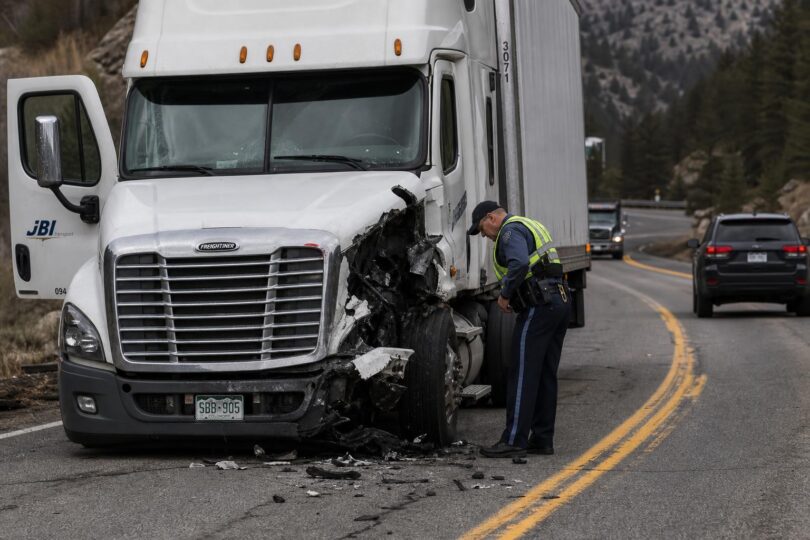

CBS Colorado reports that lawmakers are sending Senate Bill 26-035 to the governor’s desk after a deadly stretch of crashes on Colorado mountain highways. The bill increases penalties for drivers who illegally cross double-yellow lines to pass vehicles, adds tougher consequences for repeat speeders, and directs the Colorado Department of Transportation to prioritize signage in high-crash areas.
Reporter Spencer Wilson centers the story on the people who actually deal with the aftermath. Grand County EMS crews described responding to horrific head-on crashes on rural highways and pushed lawmakers to act after a deadly year on mountain roads. One lawmaker cited a crash that killed five members of a single family, including children.
The Bullet Point Brief
- Colorado mountain highways are not NASCAR with pine trees. Double-yellow lines are not decorative paint. They exist because cliffs, curves, weather, and oncoming traffic do not care about your impatience.
- This bill targets specific behavior: illegal passing, triple-digit speeding, and repeat offenders. Good. The problem is not ordinary drivers. The problem is reckless entitlement behind the wheel.
- First responders are the ones carrying these memories home. EMS crews talked about scenes that stay with them for life. Meanwhile, some guy shaving four minutes off his ski trip thinks the law is just a suggestion.
- Tougher penalties can help, but only if enforcement actually exists. Passing a bill without enough troopers on dangerous corridors is like hanging a “No Bears” sign outside a campsite and calling it wildlife management.
- Credit where it’s due: this bill drew bipartisan support because public safety should not be partisan confetti. Dead families on Highway 9 are not a left-versus-right issue.
My Bottom Line
This is one of those issues where common sense ought to beat ideology every single time.
If this bill is truly focused on illegal double-yellow passing, chronic speeders, and people driving more than 100 miles per hour on mountain roads, then good. That is not “nanny state” government. That is basic public safety.
Colorado’s mountain highways are unforgiving. There is no shoulder on half these roads. There is no margin for error. One impatient decision on a blind curve can leave families shattered and first responders spending the rest of their careers trying to forget what they saw.
The emotional center here should not be the driver complaining about penalties. It should be the family driving home from soccer practice that suddenly meets somebody else’s ego head-on in the wrong lane.
I appreciate that lawmakers are at least trying to address the culture of reckless entitlement we increasingly see on Colorado roads. Some drivers act like speed limits, passing zones, and weather warnings are merely suggestions from people who “just don’t understand their driving skills.” Every paramedic scraping wreckage off Highway 9 would probably like a word.
That said, laws on paper are not magic. Tougher penalties only matter if enforcement is real and consistent. Colorado State Patrol and local agencies are already stretched thin in many rural areas. If politicians want to take a victory lap for passing this bill, they also need to answer whether there are enough troopers, enough patrol hours, and enough resources to enforce it.
Because if dangerous roads stay dangerous and reckless drivers never see a patrol car, then this becomes another press release dressed up like a solution.
I also appreciate that this conversation stayed mostly grounded in public safety instead of turning into partisan theater. That is refreshing. Sometimes government’s job really is as simple as this: protect innocent people from reckless behavior and give law enforcement the tools to do the job properly.
And for the love of all things Colorado, if you are stuck behind someone driving cautiously through the mountains, maybe take a breath. You are not trapped in traffic. You are driving on a winding two-lane road carved through rock, snow, wildlife, tourists, and gravity itself. Slow down. The mountains will still be there five minutes later.
Source: CBS Colorado
