

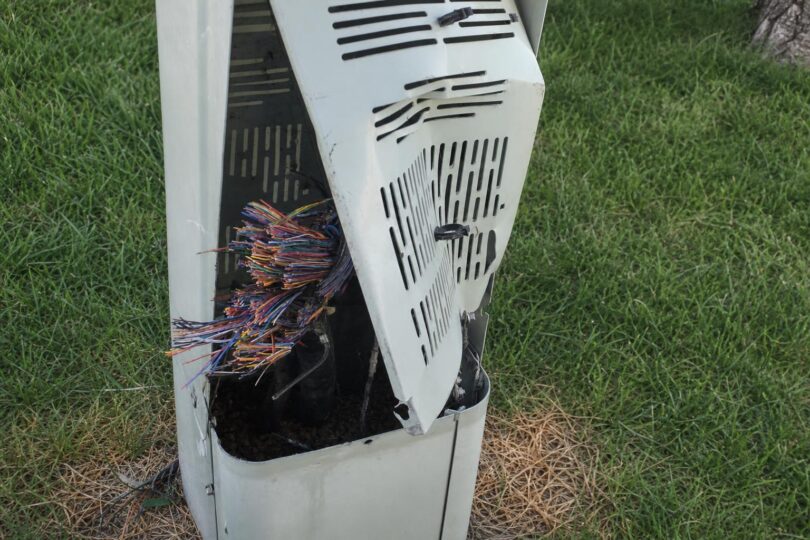

The Denver Gazette reports that copper wire theft in Colorado has moved well past the “somebody stole wire” nuisance category. Thieves are cutting into communications infrastructure tied to landlines, emergency calls, transit service, nursing homes, businesses and government operations. When those lines go down, the person paying the price may be a parent calling 911, a deputy trying to coordinate, or a firefighter rolling to a call.
According to The Denver Gazette, Lumen Technologies reported 99 copper wire theft incidents statewide in early 2026, with about $680,000 in damages. That is already more than the 78 incidents the company documented for all of 2025. Colorado Springs saw more than 40 cases early this year, with more than $440,000 in damages and impacts to more than 4,100 customers. Denver neighborhoods have seen prolonged landline outages, and RTD’s G Line has also been hit by copper theft.
The state has responded with House Bill 26-1101, which targets the sale of stolen commodity metals used in critical infrastructure. The Denver Gazette reports the new law adds criminal offenses, tightens dealer record keeping, limits certain cash transactions, requires affidavits from sellers, and gives law enforcement more tools to review records and track suspicious sales.
The Bullet Point Brief
- This is not clever scrap-yard entrepreneurship. It is theft from public infrastructure, and when emergency communications are affected, it becomes a public-safety problem in a hurry.
- Copper prices are up, so the criminal math is simple: steal the wire, sell the metal, leave families, businesses and first responders holding the bag. Copper wire is not a retirement plan.
- Lumen says these thefts can affect nursing homes, emergency services and 911 calls. That should get everyone’s attention, including lawmakers, prosecutors, telecom providers and every scrap dealer trying to run an honest business.
- The new state law tries to choke off the resale pipeline by adding tracking, affidavits, reporting requirements and limits on cash payments for certain metals. That is the right target if it focuses on criminals and not on burying legitimate contractors in paperwork.
- The public has a role, too. If you see suspicious activity around utility poles, telecom pedestals or rail infrastructure, report it. Do not assume someone with a pair of cutters and a bad plan is just “working on the lines.”
My Bottom Line
Property rights and public safety go together. Limited government still has a duty to restrain harm, especially when theft threatens emergency response. If a criminal cuts communications lines and interrupts access to 911, that is not a petty inconvenience. That is a direct risk to life, safety and public order.
I support cracking down on the market that makes this theft profitable. That means stronger tracking of copper sales, real consequences for repeat offenders, better coordination with recyclers, and faster repairs from providers when service is disrupted. Punish the thieves and choke off the resale pipeline without making every legitimate contractor prove he is not a criminal.
This is also where local government feels the pain first. The policy debate may happen at the Capitol, but the failure shows up at dispatch centers, sheriff’s offices, fire departments, neighborhoods and kitchen tables where someone is trying to make a call that must go through. Counties do not have the luxury of treating broken communications as a theory.
Colorado should treat infrastructure theft like the public-safety threat it is. Protect 911. Protect property. Protect honest businesses. And make it painfully clear that stealing from critical infrastructure is not quick cash. It is a crime with real victims.
Source: The Denver Gazette
