

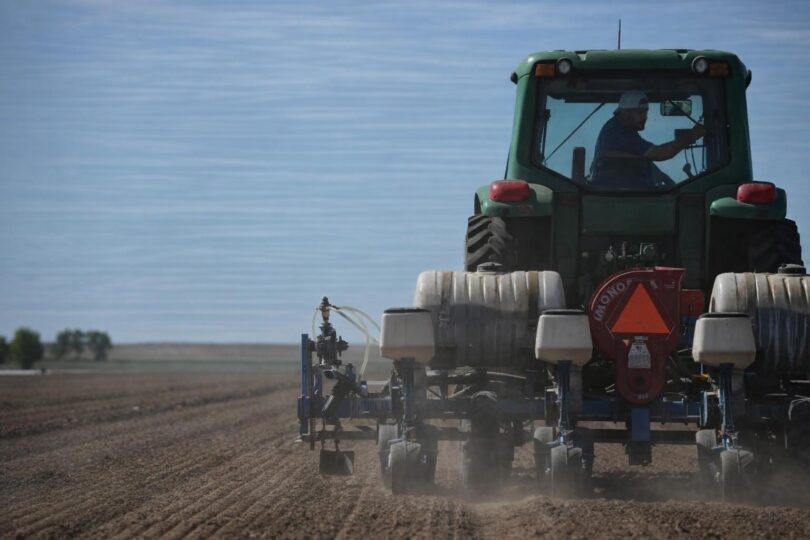

Bruce Finley’s piece in The Denver Post lays out a hard truth that too many people at the Capitol treat like background noise. Colorado farmers are getting squeezed from every direction at once. The article walks through drought, low snowpack, dry soil, rising diesel and fertilizer costs, labor uncertainty, pest pressure, hail damage, and the brutal math now forcing growers to cut acreage or consider not planting at all.
Finley centers the people living that reality, from Pueblo chile growers to Olathe sweet corn producers to West Slope peach growers. These are not abstract “stakeholders.” These are families trying to decide whether they can water 20 acres, whether they can keep orchards alive through August, and whether they can survive one more season without getting buried by costs they did not create. The article is reported with real voices and real numbers, which is refreshing in a climate where agriculture usually gets talked about by people whose closest brush with farming is the produce aisle.
And yes, the article notes Gov. Jared Polis pointing to climate change and water scarcity. Fair enough. Water is absolutely part of the story. But pretending this crisis begins and ends with the weather is a dodge. Farmers are not just fighting the sky. They are fighting policy, prices, labor rules, fuel costs, and a government culture that loves to praise agriculture right before making it harder to stay in business.
The Bullet Point Brief
- Colorado’s $9 billion agriculture sector is under real strain, with some farmers reducing planting and others considering not planting at all. That is not “market adjustment.” That is a warning flare.
- Pueblo chile growers are already talking about sharply reduced production because the Bessemer Ditch is running low and water is scarce. When the ditch is dry, the talking points in Denver do not irrigate a single row.
- Olathe sweet corn growers are cutting way back, in one case from 1,600 acres to as little as 100 to 300. Translation: less local food, tighter supply, and higher prices for families at the store.
- Peach growers on the Western Slope are staring at low reservoir levels, hail damage, frost risk, and the possibility of losing orchard health going into next year. That is what a compounding crisis looks like when real people have to live through it.
- Even the farmers still planting are doing it with gritted teeth. They are stockpiling inputs early, cutting lower-value crops, chasing extra water shares, and hoping to survive the year. Hope is not a farm policy. It is what people cling to when the people in charge are asleep at the switch.
My Bottom Line
I have said this before, and I will say it again: the Colorado farmer is one of the toughest people you will ever meet. He does not ask for applause. He asks for a fair shot. Right now, he is not getting one. He is taking hits from drought and water shortages, sure, but also from energy costs, labor headaches, supply chain strain, and government decisions made by people who would not last half a day on a tractor.
Here’s what matters for Colorado families. When a farmer cuts acreage, that does not stay on the farm. It lands at the grocery store. It lands in the family budget. It lands in the school lunch bill. And when prices go up, the usual suspects in government will do what they always do: act shocked, hold a hearing, and blame everybody but themselves. You can only squeeze so many nickels before you start milking the buffalo.
I am tired of hearing politicians talk about farmers like they are a prop in a campaign ad. These are the men and women feeding this state while being treated like an afterthought. If Denver really wanted to help, it would stop making energy more expensive, stop piling on labor burdens, stop governing rural Colorado like it is a nuisance, and start acting like food production matters. Because it does.
The farmer did not cause the drought. The farmer did not create the fuel spike. The farmer did not write the rules that make it harder to hire, harder to irrigate, and harder to stay afloat. But the farmer will get blamed when prices rise and shelves get thinner. That is the part that burns me up. The people producing our food are carrying the load, and too many policymakers are standing on the sidelines with a press release.
So yes, pray for the Colorado farmer. Then do more than pray. Respect him. Back him. Stop voting for policies that make his job harder and your groceries higher. We will measure this in months and dollars, not slogans.
Source: The Denver Post
