

People frequently tell us that government ought to be run more like a business.
Fair enough. Let’s apply that standard.
A well-run business does not make a major financial decision based on a slogan. It asks practical questions: What are we buying? Is it necessary? How long will it last? What will financing cost? How much cash must we preserve? What other obligations are coming? And can we comfortably make the payments? Can we pay cash?
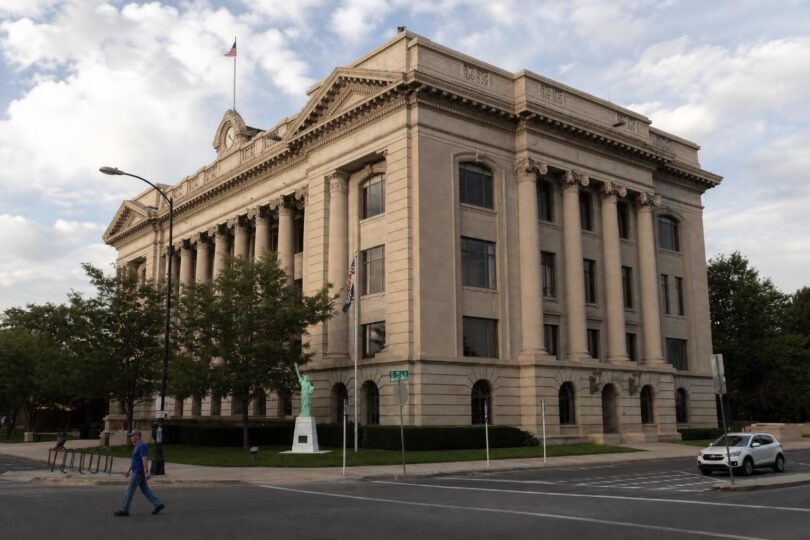
That is exactly how Weld County has evaluated the new Justice Center.
For 19 years, Weld County has proudly described itself as debt-free. That represents something worth protecting: fiscal discipline, low taxes, conservative spending and a reluctance to place today’s bills on tomorrow’s taxpayers.
But “debt-free” is a description of the balance sheet. It is not the entire mission of county government.
The mission is to provide the services required by law, protect taxpayers and keep the county financially strong – not merely to preserve a slogan.
The Justice Center is not a convention center, sports stadium or speculative economic-development project. Colorado law says each county, at its own expense, shall provide a suitable courthouse. A separate statute says county commissioners are responsible for providing and maintaining suitable courtrooms and other court facilities.
The current facilities have documented safety, accessibility, circulation, evidence-storage and capacity deficiencies. The State Court Administrator has deemed our current court facility unsuitable and estimates that Weld County’s courts and probation services will require approximately 226,000 additional square feet over the next 20 years. This is a legally required county responsibility, not an optional amenity.
The Colorado Supreme Court’s 2025 decision in League of Women Voters of Greeley v. Weld County reinforces the broader principle that home-rule status does not allow a county to disregard mandatory statewide duties. That case concerned redistricting – not courthouse construction or financing – so we should not pretend it decided the Justice Center dispute. But its central lesson is relevant: when state law assigns Weld County a mandatory function, our charter does not make that function disappear.
Colorado law is equally direct about financing. Section 30-11-104.1 expressly authorizes counties to enter into certificate-of-participation agreements to finance a courthouse. The statute limits the term to the useful life of the property and no more than 30 years. It makes the payment subject to annual appropriation and provides that the agreement is not indebtedness under constitutional, statutory or home-rule charter debt limitations.
The General Assembly did not accidentally leave a courthouse on some vague list. It specifically named courthouses as an authorized use of COP financing.
Now, let’s be honest about what that means.
A COP may not be “debt” under the legal definition, but it creates a real financial obligation. The county receives money today and anticipates making payments containing principal and interest for years to come. We should not insult people’s intelligence by pretending otherwise.
The proper defense is not that COPs are free money. The defense is that, under the right circumstances, financing a portion of a necessary, long-lived facility can be more prudent than emptying hundreds of millions of dollars from the county’s reserves all at once.
Under the current model, approximately $249 million would be financed through COPs, while county cash would pay for the parking garage and other costs. Annual payments are currently estimated at no more than approximately $20 million – less than three percent of the county’s $703 million budget. The certificates could (and, in my opinion, should) be paid off beginning in December 2036.
Paying cash for everything would avoid financing costs. That is the strongest argument for the cash option, and it is a legitimate argument that I completely understand.
But paying cash is not free either.
The county’s analysis found that paying approximately $368.5 million in cash would reduce its financial cushion from roughly 17 months of operating expenses to about seven months. The selected cash-and-COP approach would preserve approximately 14 months of operating expenses.
Spending the cash would also eliminate an estimated $11 million per year in investment earnings at current rates. After considering those earnings, the estimated net additional cost of the COP approach is between $20 million and $35 million over 20 years.
That is the actual choice. It is not “pay nothing” versus “go into debt.” It is paying a financing cost to preserve liquidity versus avoiding financing costs by substantially reducing the county’s available cash.
And that decision cannot be evaluated by looking at the Justice Center alone.
In 2023, Weld County hired Gensler to conduct the county’s first comprehensive facilities master plan. This was not merely a courthouse study. It was a countywide examination of building conditions, maintenance requirements, service delivery and the space Weld County will need as its population grows.
The findings were sobering. Approximately 67 percent of county buildings are between 25 and 50 years old. The county was projected to grow approximately 53 percent over the following 20 years. The Weld County Facilities Department currently maintains more than 100 facilities and locations and typically manages approximately 110 projects each year, which includes everything from remodels and renovations to preventative maintenance.
The adopted 2026–2030 capital plan translates that master plan into more than $512 million of identified projects. The plan included approximately $346.8 million for the judicial-center projects under the estimate then in use (it’s $368.5 million now – cost escalation/inflation is very real), approximately $95.5 million for District Attorney and administration facilities, and approximately $48.5 million for repairs and maintenance. It also identified jail, law-administration, public-safety, service-center and other infrastructure work.
Those figures will change as projects are designed, prioritized and priced, but the overall conclusion will not: Weld County has a facilities portfolio to manage, not one isolated building to purchase.
The most immediate need after beginning the Justice Center is a new District Attorney building.
Current planning places that project roughly in the $30 million-to-$40 million range. It cannot simply be pushed into the distant future. The District Attorney’s Office is part of the same justice system, and its attorneys, investigators, victim advocates and support personnel need appropriate space near the courts they serve. My opinion: We need to build it now.
By preserving county liquidity through the Justice Center financing, Weld County can begin that DA building promptly and pay cash for it.
That is an important part of the conservative argument. We are not proposing to finance everything simply because we have discovered the municipal bond market. We can use financing selectively for the county’s largest, longest-lived, constitutionally-mandated asset (the Justice Center) while continuing to pay cash for a smaller but urgent project.
That is what a disciplined capital strategy looks like.
Human Services presents another rapidly growing need. The 2026 budget projects Weld County’s Medicaid caseload increasing from 41,778 in 2024 to 62,000 in 2025 and 65,000 in 2026. The Human Services budget grew approximately 15 percent from 2025 to 2026, and additional case-management personnel were added to address the workload. These services are not optional – Weld County is statutorily mandated to perform these functions
Those are not just numbers on a spreadsheet. More cases require employees, interview areas, secure records, technology, parking and accessible places where residents can receive services. As the county grows, the existing Human Services campus and county administration facilities will face increasing pressure.
The county must also address administration space. A county serving a population that may approach twice its present size cannot assume that buildings designed decades ago will indefinitely accommodate Finance, Human Resources, Information Technology, elected offices and the administrative functions supporting every county department.
And while new facilities attract attention, the less glamorous work does not go away. Roofs must be replaced. Elevators must be modernized. Heating and cooling systems reach the end of their lives. Security systems must be upgraded. Parking lots, generators, doors, plumbing and data infrastructure must all be maintained.
There is no ribbon-cutting ceremony for replacing an air handler, but try operating a Health Department, jail or Human Services building without one.
That is why describing all available cash as “surplus” is misleading. The money has not necessarily been assigned by contract, but much of it has a foreseeable job.
If Weld County spent nearly $370 million in cash on the Justice Center, the county would still need to build the DA facility, expand or reorganize Human Services, address administration space and complete tens of millions of dollars in maintenance and repair work.
The all-cash option would not eliminate those obligations. It would merely leave less cash available to meet them.
In fact, draining the county’s reserves to preserve the “debt-free” label today could force a future board to finance the DA building, administration space or Human Services expansion tomorrow – possibly at a worse interest rate and under greater time pressure.
We could win the press release and lose the financial strategy.
A good business understands working capital. It does not dramatically reduce its operating accounts to pay cash for a building simply so the owner can boast that there is no mortgage. It determines how much liquidity it needs to survive a downturn, respond to an emergency and meet its other capital obligations.
That principle matters even more for county government. A business may delay an expansion, discontinue a product or close an unprofitable location. Weld County cannot decide to suspend the courts, stop operating the jail, quit maintaining roads or tell residents that Human Services will reopen after the next oil-and-gas cycle.
Weld County’s own 2026 budget says property-tax revenue is highly dependent upon oil-and-gas valuation and that its volatility has had a major effect on county budget planning for more than a decade.
We have seen that risk in real life. Weld County’s assessed value fell approximately 20 percent in 2024, primarily because oil-and-gas valuation declined.
We have also seen the value of liquidity during an emergency. Following the 2013 flood, Weld County had the resources to begin repairs without waiting for the federal government. Portions of the reimbursement process remain unresolved today – 13 years later.
The disaster did not wait for FEMA to cut a check.
The Government Finance Officers Association says financing long-lived public infrastructure can be a valuable strategy because it spreads the cost over the asset’s useful life. It also says reserve levels should account for volatile revenues, natural disasters, immediate capital needs and potential cuts in state or federal assistance.
That describes Weld County almost word for word.
But preserving liquidity does not mean government should accumulate money indefinitely merely because having a large bank balance feels safe.
Reserves are a tool. Like debt-free status, they are not the mission.
At the request of Commissioner Maxey, the Board of County Commissioners will soon meet to establish a specific, stated policy governing the amount of operating reserves Weld County should maintain. That is an important step because taxpayers deserve something more precise than assurances that the county has “a lot of money” or “plenty of reserves.”
Jason rightly brought to the forefront that a responsible reserve policy should answer several questions plainly: What counts as an operating reserve? Which funds are included? What risks is the reserve intended to cover? Under what conditions may it be used? How quickly must it be replenished? And what happens when the balance exceeds the policy target?
Those definitions matter. We must also make sure that the same dollars are not counted once as part of the county’s operating reserve and then counted again as a separate contingency reserve. Before describing any money as excess, the Board and Finance Department must provide a transparent, apples-to-apples accounting.
After Weld County pays cash for the Justice Center parking garage and makes its other planned cash investments in the project, the selected financing structure is expected to leave the county with approximately 14 months of operating capacity.
In my judgment, 14 months is more than Weld County needs.
The Government Finance Officers Association recommends that general-purpose governments maintain at least two months of regular General Fund operating revenue or expenditures in unrestricted fund balance. But that is a minimum – not a universal ideal. GFOA specifically says a government may need substantially more when it is dependent on volatile revenues, exposed to natural disasters or facing significant one-time capital needs.
Weld County checks all three of those boxes.
Our oil-and-gas property-tax base can change dramatically with commodity prices, production levels, regulation and assessed valuation. We are a large, geographically expansive county exposed to floods, fires, blizzards and other emergencies. And the facilities master plan documents substantial capital obligations over the coming years.
For those reasons, I do not believe two months would be sufficient or conservative for Weld County.
My present view is that a true operating cushion of approximately six to eight months would be more appropriate. That is still three to four times the GFOA minimum. It would give the county considerable time to respond to an oil-and-gas downturn, reduce expenditures in an orderly manner and continue essential services without raising taxes or laying off employees.
But it would also recognize that there is a cost to holding too much taxpayer money.
Every dollar maintained above a defensible reserve target is a dollar that cannot be used to complete an identified capital project, retire the COPs early or remain in the hands of the taxpayer who earned it.
The same discussion needs to occur regarding the Contingency Fund.
That fund currently holds approximately $165 million. Weld County established it to protect county operations against major reductions in oil-and-gas valuation, unexpected revenue shortfalls and genuine emergencies. Those are legitimate purposes, and the fund should remain substantial.
The county’s published policy generally calls for the Contingency Fund to equal between 10 percent and 20 percent of annual expenditures, while allowing the Board to exceed that range when circumstances – particularly oil-and-gas volatility – justify it.
When the fund was being built, the original planning target discussed by the Board was approximately $100 million. It has since grown beyond that figure.
My position is that the Contingency Fund should initially be brought closer to that original $100 million target, assuming the county’s financial stress testing confirms that amount can withstand a serious oil-and-gas downturn and other foreseeable emergencies.
That would not eliminate the Contingency Fund. It would leave Weld County with an extraordinarily substantial emergency reserve. But it could release approximately $65 million for identified, one-time public needs instead of allowing that money to accumulate without a defined stopping point.
Right-sizing the operating reserve and the Contingency Fund could make significant cash available for the projects already identified through the facilities master plan.
That money could help pay cash for the new DA building, address Human Services and administration space, replace failing roofs and mechanical systems, complete security and accessibility improvements and meet other documented capital needs without issuing additional debt.
The critical rule is that reserve reductions should fund one-time needs, not permanently expand recurring government.
Using excess reserves to hire employees or create programs that require funding every year would simply convert temporary cash into permanent obligations – that’s foolish and that’s not what I am proposing. I am proposing using those reserves for necessary buildings, maintenance and other one-time capital investments and argue that it is financially sound because the expenditure ends when the project is complete.
Finally, my most urgent goal: taxpayer relief.
For roughly two decades, Weld County has charged property owners less than the county is legally permitted to collect. The county’s TABOR mill levy cap is 22.038 mills. For 2025 and 2026, the county set its levy at 15.956 mills, providing taxpayers a temporary tax credit of 6.082 mills.
That credit represents real money left in the hands of Weld County property owners.
Once the Board establishes a clear reserve policy, protects the proper operating cushion, provides for the Contingency Fund and accounts for the facilities projects we know are coming, I believe we can increase that tax credit.
An increased credit would lower Weld County’s effective property-tax rate. It would recognize that government should collect what it reasonably needs – not every dollar it is legally allowed to collect. Weld County recognized that nearly 20-years ago when it began issuing tax credits.
I am not suggesting that the Board promise a tax reduction before we complete the analysis. We must first define our reserve target, test it against realistic oil-and-gas declines, account for known capital projects and make certain the Justice Center payments (and the establishment of a new fund to retire COPs early in 2036) fit comfortably inside the existing budget.
But once those obligations are honestly measured, money beyond the policy target should not remain in government accounts merely because government has grown accustomed to seeing it there.
It should be invested in one-time public assets, used to retire the COPs when economically advantageous, or returned to taxpayers through a larger mill-levy credit.
And here is the larger point: this flexibility exists because we did not spend nearly $370 million in cash on the Justice Center all at once.
Issuing COPs preserves the county’s liquidity while the Board decides – openly and by stated policy – how much liquidity is actually necessary.
It allows us to build a statutorily mandated Justice Center, pay cash for its parking garage and other project costs, pay cash for the urgently needed DA building, address the facilities master plan, maintain a conservative reserve, prepare for early retirement of the financing and potentially provide additional property-tax relief.
Those goals do not compete with conservative fiscal responsibility.
Taken together, they are conservative fiscal responsibility.
Look, I didn’t want to issue COPs – I enjoyed the “debt free” designation just as much as everyone else. However, I believe the prudent and limited use of COPs are a conservative, business-like financial decision.
We should use them only in the financing of the Justice Center. We should establish a separate fund in which we place money to be used to retire the COPs in 2036. We should preserve an operating reserve guided by a stated policy. We should prohibit the financing from becoming a blank check for project expansion.
We should then use the liquidity we have preserved for the purposes that justify preserving it: paying cash for the new DA building, meeting the growth needs of Human Services and administration, maintaining existing county buildings, addressing emergencies and protecting essential services through the next economic downturn.
That is not abandoning Weld County’s conservative tradition.
It is applying that tradition to the largest collection of capital needs in county history.
Being debt-free is an admirable condition when it serves taxpayers. But if remaining debt-free requires us to drain our liquidity, weaken our ability to respond to emergencies and ignore other known capital needs, then we have protected the slogan at the expense of the balance sheet.
Fiscal conservatism does not mean refusing every financial tool. It means spending only for lawful and necessary purposes, financing only what can comfortably and quickly be repaid, paying cash where it makes sense, preserving taxpayers’ assets and refusing to leave future boards with either neglected buildings or an empty bank account.
The question is not whether COPs sound as good on a bumper sticker and in future political campaigns as “debt-free.”
The question is whether this financing protects Weld County taxpayers while allowing the county to perform its legal duties, maintain the right amount of reserves, complete necessary facilities and return money that government does not reasonably need.
Under these circumstances, it does.
