
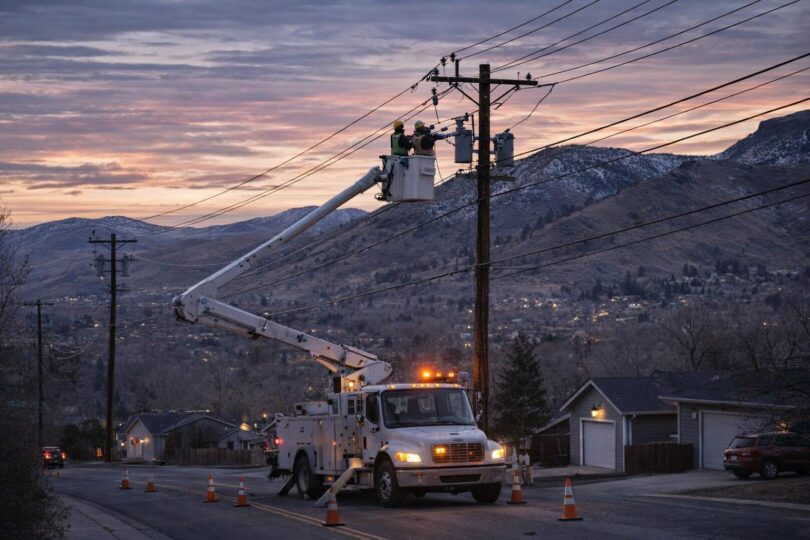

Colorado Politics laid out a pretty simple scene: Xcel Energy got hauled in front of state utility regulators and got an earful from residents, businesses, and local officials over Public Safety Power Shutoffs across the Front Range.
This was a Colorado Public Utilities Commission hearing about Xcel’s PSPS tool and the fallout when the lights go out for days, communications go down, and communities eat the cost while the company calls it wildfire risk management.
The Bullet Point Brief
- The Public Utilities Commission held a hearing after Xcel used Public Safety Power Shutoffs (PSPS) that left tens of thousands without power in parts of the Front Range.
- Local officials and community leaders criticized the shutoffs as shifting costs and risk onto residents, businesses, and local governments.
- Speakers raised concerns about major business losses, damaged communications systems, and risks to medically vulnerable residents during multi-day outages.
- Public safety agencies described impacts on jails, emergency coordination, evidence storage, and even fires sparked after lines were re-energized.
- The commission is considering new rules on warning timelines, outage mapping, and restoration processes, with a follow-up meeting set for Feb. 2, 2026.
My Bottom Line
Xcel should get an earful, but so should Governor Polis and the Democrat-controlled state legislature. They are the ones placing virtue above physics and market reality, and then acting surprised when a strained system breaks under real-world conditions.
Here’s the part that drives me nuts: we keep hearing about mandating an all-electric future, right at a time when the state’s largest provider proves it can’t provide power when the wind blows. That isn’t progress. That’s policy cosplay with real consequences for families, businesses, jails, and hospitals.
I don’t fully blame Xcel. They are a publicly traded company that is doing what companies do, mitigating risk. But if state policy is boxing them into spending priorities that look good at a press conference instead of hardening lines, improving restoration, and keeping communications online, then yes, the system is going to keep failing people when they can least afford it.
If your grand plan needs perfect weather to work, it’s not a plan, it’s a brochure. Stop picking energy winners and losers and start demanding a grid that can actually take a punch.
The grid is strained beyond capacity and investments need to be made, and the first test is simple: will the state quit virtue signaling to that radical, environmental base long enough to let reliability and affordability lead the parade. Because in the real world, cold nights and small businesses do not run on good intentions.
Source: Colorado Politics
