

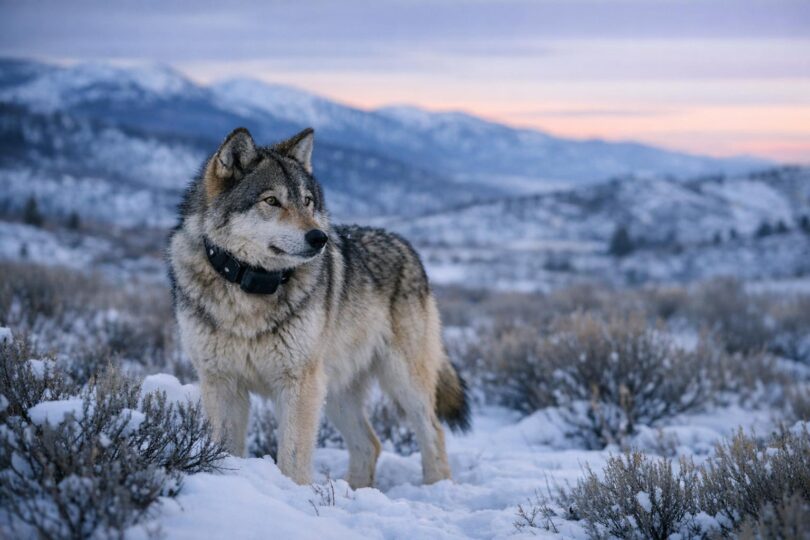

If you feel like we have been living in a never-ending wolf soap opera, you are not alone. The Denver Gazette reports the 14th wolf death since reintroduction, this one during a collaring operation in northwest Colorado.
Colorado Parks and Wildlife says the wolf, identified as #2305, died Jan. 28 in Routt County while crews were trying to capture and collar members of the King Mountain pack because of low collar batteries.
The Bullet Point Brief
- CPW says the 14th wolf death since reintroduction happened during a collaring operation in northwest Colorado.
- The wolf was identified as #2305 and died Jan. 28 in Routt County.
- CPW says it was the male of the breeding pair tied to the King Mountain pack.
- CPW says a necropsy is underway and final results and lab tests are pending.
- CPW says it does not intend to bring in more wolves this winter season, and Colorado currently lacks a source for the next group.
My Bottom Line
I want to stop talking about the wolves. I have received emails telling me to shut up, already about the wolves. Fair enough. But here we are again, because the state ran another hands-on operation and another wolf died.
This is the part where I ask, again, for a per head cost on this Boulder-based nature experiment. Not vibes. Not slogans. Dollars. How much has it cost us? How much has it cost Colorado ranchers? If the state is going to manage wildlife like a science project, it better be able to itemize the damn budget.
The Denver/Boulder bubble voted for this. Rural Colorado did not, but got it anyway. That is not how you build trust, and it is sure not how you do local-first governance. Ballot box biology looks real noble right up until somebody else is paying the bill.
If you can’t measure it, you can’t defend it. Translated: show the full costs, show the full impacts, and stop asking rural Colorado to smile while we get stuck holding the bag.
And yes, I mean it when I say: Mother Nature (read GOD) will not be mocked. For the love of Colorado Beef, just make it stop. If the state insists on pressing forward, then at minimum we need straight answers, accountability for outcomes, and conflict tools that actually protect livestock and the people who raise it.
Source: The Denver Gazette
