


The Denver Gazette laid out an uncomfortable reality: Denver has been “doubling down” on Vision Zero, and traffic deaths are still climbing. In 2025, fatalities went up from 80 to 93. Since Denver adopted its Vision Zero plan in 2017, deaths are up 82%. Serious injuries dipped last year, but the longer trend is still upward.
Why should normal people in Colorado and Weld County care? Because Denver is the policy factory for this state. Ideas get born in the metro, get branded, then get pushed outward like they are one-size-fits-all. And when the results do not match the promises, the next move is usually more rules, more tickets, more gadgets, and less patience for the folks who just need to get to work, pick up their kids, and make it home alive.
I have been involved in Northern Colorado transportation for over two decades. About 10 years ago, a term started creeping into our conversations: Vision Zero. It’s one of those branded and packaged slogans that liberals love to latch on to because it just FEELS right. “Our vision is zero deaths on our roads.” Let me pump the brakes right here. Every traffic death is a tragedy, no doubt. I mourn for the families. But I am also a realist. People are people. Accidents happen.
The proper goal is to MINIMIZE deaths, and that takes serious work, not slogan work. Denver’s approach, as described in the article, leans hard on speed reduction, “road diets,” bollards, humps, bright paint, and expanded automated speed enforcement. And now we have a city where pedestrian deaths jumped to 35 last year, cyclist deaths rose to five, and stand-up scooter deaths jumped to eight. DOTI even reported that eight of those 35 pedestrian deaths happened on the freeway. That should stop every policymaker in their tracks. A “road diet” on a neighborhood street does not fix people ending up on an interstate.
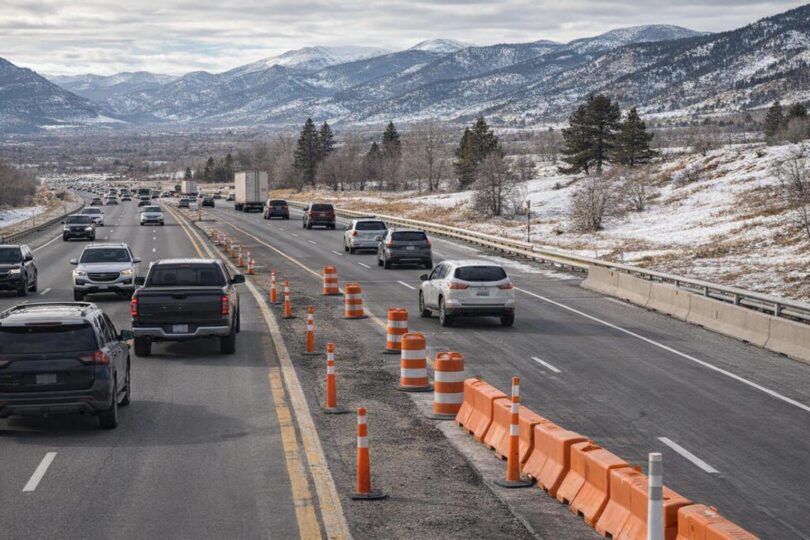
Here’s the part that drives me nuts: Colorado FAILS to do the unglamorous thing that actually matters, which is INVESTMENT in roadways. Install safety features. Expand capacity where it’s warranted. You can call it concrete, you can call it lanes, you can call it boring. I call it results. Since widening North I-25 to three lanes, traffic accidents have decreased by 46%! That’s the kind of outcome-focused question Denver should be asking: what actually reduces crashes here, with our roads and our drivers?
Instead, we get the predictable script. The same crowd that bleats about Vision Zero gasps at the thought of widening roadways. “But, but, but what about the GREENHOUSE GAS?!” Then Vision Zero becomes just another hammer to regulate your behavior, with speed cameras and ever-changing lane mazes, while we argue about paint colors and brand promises.
If Denver wants credibility, here are the next steps and questions. Show the receipts street by street: which changes reduced deaths, not just “felt safer”? How many fatalities are tied to speed, red light running, distraction, impairment, or interstate pedestrian activity? What is the plan for freeway pedestrian deaths specifically? What is the enforcement strategy, and what are the guardrails on automated ticketing so it does not become a cash machine?
The Bullet Point Brief
- Denver’s traffic deaths rose in 2025, even as the city doubled down on Vision Zero.
- Colorado should demand street-by-street proof of what actually reduces fatalities.
- Freeway pedestrian deaths require a specific plan, not neighborhood design tweaks.
- Real safety includes investing in roadway design, safety features, and capacity where warranted.
- Automated ticketing needs clear guardrails so safety does not turn into a revenue program.
My Bottom Line
Every traffic death is a tragedy. But slogans do not fix intersections, medians, or interstates.
Local control means we pick what works, we measure it honestly, and we change course when the data says the plan is not working.
I want fewer funerals and fewer excuses.
Source: The Denver Gazette
